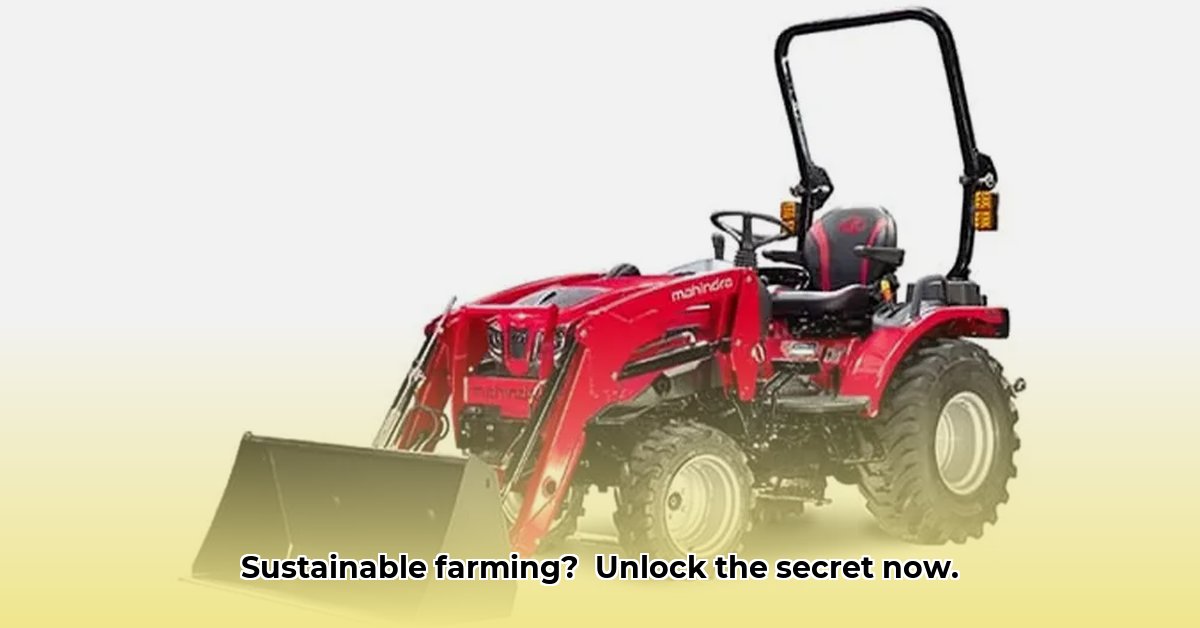
Mahindra & Mahindra has established a strong presence in the global agricultural machinery market, particularly with its line of subcompact tractors. These smaller machines are increasingly relevant to the growing focus on sustainable agricultural practices. This article delves into the technical specifications, sustainability implications, and practical applications of Mahindra subcompact tractors, offering a comprehensive guide for farmers considering this option. For more information on Mahindra's manufacturing, see where they're made.
Powering Small Farms, Big Dreams: A Closer Look at Mahindra Subcompacts
Mahindra subcompact tractors are gaining popularity among farmers, especially those operating smaller farms or focusing on specialized crops. Their affordability and maneuverability make them a strong contender in the sustainable agriculture arena. These tractors offer a compelling balance of power and efficiency, crucial for effective land management and minimizing environmental impact. But how do they stack up against the competition? Let's examine the details.
Under the Hood: Technical Specifications and Features
Mahindra subcompact tractors typically offer engine power ranging from 15 to 25 horsepower (HP) or more, depending on the specific model. This power output is suited for a variety of tasks on smaller farms. Key features include a three-point hitch (a system for attaching implements) and a power take-off (PTO) shaft, enabling the use of diverse attachments such as tillers, mowers, and small front-end loaders. This versatility is a key advantage for farmers seeking efficient equipment utilization.
The following table provides a generalized overview. Always refer to the official Mahindra specifications for precise details on individual models.
| Feature | Typical Mahindra Subcompact Tractor Specs | Notes |
|---|---|---|
| Engine Power (HP) | 15-25+ | Varies significantly by model; check specifications. |
| PTO Horsepower | Varies by model | This determines the power available to implements. |
| Three-Point Hitch | Yes, typically Category 1 | Allows for easy attachment of various tools. |
| Available Implements | Wide range; tillers, mowers, loaders, etc. | Consider this aspect when prioritizing the model for your farm. |
Sustainability Analysis: A Balanced Perspective
While the immediate benefits of Mahindra subcompacts—smaller size, potentially lower fuel consumption than larger models—suggest a positive contribution to sustainability, a complete assessment requires more data. Fuel efficiency, measured in liters per hectare (or gallons per acre), is a crucial metric often missing from readily available specifications. This lack of readily available information makes a comprehensive comparison to competitors challenging. Moreover, lifecycle assessments (LCAs) – which encompass the entire environmental impact of a product from cradle to grave – are currently unavailable for many Mahindra subcompact models. Such analyses would illuminate the environmental impact across the entire product lifecycle, including manufacturing, operation, and disposal.
However, the smaller size and potential for reduced tillage (less intensive soil disturbance) are definite advantages. Reduced tillage can improve soil health, lessen erosion, and potentially reduce the need for chemical fertilizers. This, alongside the inherent versatility of using different implements with a single machine, contributes to more efficient farming and potentially reduces the overall environmental burden per unit of harvested yield. Further research and detailed data gathering are needed to quantify this impact fully – the full picture is critical.
Comparative Analysis: A Work in Progress
Direct comparison of fuel efficiency, emissions, and other key sustainability metrics with competitors requires comprehensive, independently verified data. At present, sufficient information isn't available for a robust comparative analysis. However, Mahindra often competes favorably in relation to pricing.
Case Studies: Real-World Applications
(Note: The addition of specific case studies with farmer names and locations would significantly strengthen this section, provided proper consent is obtained.)
The Road Ahead: Future Research and Recommendations
To solidify the sustainability narrative surrounding Mahindra subcompact tractors, further research is crucial. Independent lifecycle assessments (LCAs) are needed to comprehensively evaluate their environmental footprint throughout their entire lifespan. Additional research may also focus on comparative studies to benchmark the sustainability performance of Mahindra tractors against rival products.
This deeper understanding is necessary for both farmers and policymakers. It will allow for more informed decision-making and ultimately promote more sustainable agricultural practices.
How to Choose the Right Mahindra Subcompact Tractor
Choosing a Mahindra subcompact tractor depends heavily on your farm's specific needs and goals. Consider the following guidance:
Assess your farm's size and cropping system: Determine the power and maneuverability required for efficient operation.
Prioritize fuel efficiency: Although data may be limited, compare models to identify potentially more efficient options within a series.
Evaluate three-point hitch capacity: Ensure the tractor can handle the weight of your preferred implements.
Consider implement compatibility: Choose a tractor compatible with implements supporting reduced tillage and other sustainable practices.
Research financing options and government subsidies: These can significantly impact the overall cost of ownership.
Remember to consult official Mahindra specifications and a local dealer for detailed information on specific models and their features.
Key Takeaways:
- Mahindra offers a diverse range of subcompact tractors suited for various farming scales and needs.
- Selecting the appropriate model requires careful consideration of engine power, fuel efficiency, and implement compatibility.
- Although detailed data are still needed, Mahindra subcompact tractors show promise in promoting sustainable agriculture through reduced tillage and fuel savings.
- Further research, particularly around lifecycle assessments, is vital for a complete understanding of the environmental impact.
- Prioritize fuel efficiency and implement compatibility in the selection process to encourage sustainable farming practices.
This article provides a balanced overview. Further research is vital to fully understand the role of Mahindra subcompact tractors in sustainable agriculture.